The history of Kriya Yoga in Latvia
The ideas of Krijas (breath and inner attention) appeared in Latvia as early as the beginning of the 20th century. The tradition passed through periods of change — quietly, in small groups and through personal transmission — until today, when it is once again openly expressed through seminars, initiations and community work.
The beginning of the 20th century
The arrival of Kriya Yoga in Latvia can clearly be seen in the context of the spread of Eastern spiritual practices in Europe, or more broadly, in the so-called Western world, which began at the end of the 19th century and spread throughout the 20th century thanks to the work of Paramahansa Yogananda and his followers.
In the early years of the Republic of Latvia, in the early 1920s, the Latvian Yoga Society or “Yoga Science Center in Latvia” was established, which at the time was one of the very first organizations of its kind in Europe.
Jānis Veselis, secretary of the Latvian Yoga Society, learned about Yogananda’s activities in America and began corresponding with his assistant at the time, Swami Dhirananda. By the end of the 1920s, Veselis was already practicing diligently, following the instructions of Dhirananda and Yogananda. He showed an active interest in the details of the exercises, asked questions in his letters, and received clarifying answers and explanations from Dhīrānanda and Yogananda. Jānis Veselis also received Yogananda’s monthly magazine on inner culture, “East-West.” As a result, Yogananda’s materials intended for a wider audience were available to members of the Latvian Yoga Society from 1928 onwards. Thanks to J. Veselis’ efforts, cooperation developed between the Latvian Yoga Society and the Self-Realization Fellowship in America, which was established to spread Yogananda’s Kriya Yoga. Although Paramahamsa Yogananda had no plans to expand his activities in Europe during the nearly 20 years leading up to World War II, as can be read in one of his letters
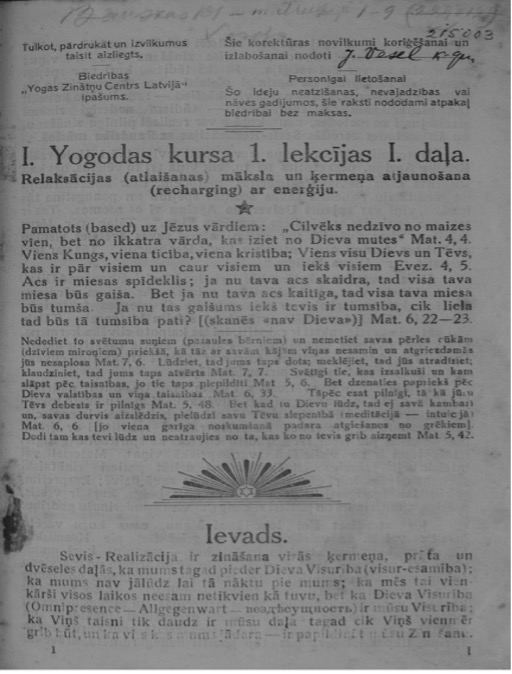
The first page of the Kriya Yoga syllabus published by the Latvian Yoga Society (from the personal archive of Maigonis Ēriks Ābols)
Yoga during the Soviet occupation
The Latvian Yoga Society existed until the arrival of Soviet power in Latvia in 1940. The Soviet regime had no need for organizations representing worldviews that were alternative to its own, and as part of the harmful bourgeois lifestyle, the yoga society was forced to cease its activities.
With the outbreak of World War II, worldly material concerns took precedence, and the dissemination of spiritual teachings became superfluous. Kriya Yoga was also no longer needed. The members of the society scattered in all directions. Some were affected by the war and deportations, others emigrated, but there were also those who remained in Latvia. Among them was Jānis Veselis, who survived all the changes and remained in Latvia.
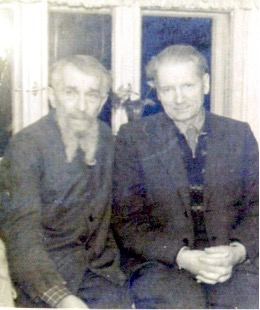
Jānis Veselis together with the famous clairvoyant Fink in the second half of the 1950s. (photo from the personal archive of Maigonis Ēriks Ābols)
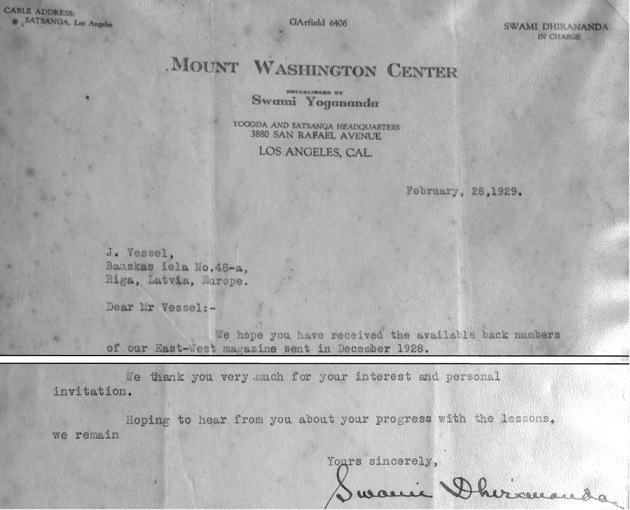
Beginning and end of Swami Dhīrānanda’s letter to Jānis Veselis, February 1929 (from the personal archive of Maigonis Ēriks Ābols)
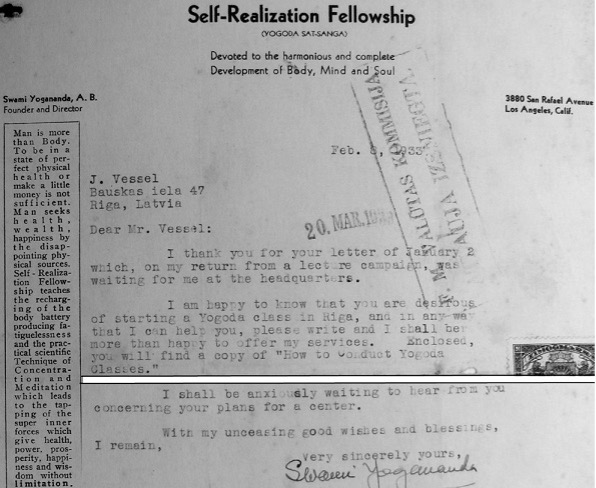
Excerpts from the beginning and end of Yogananda’s February 1933 letter to Veselis (from the personal archive of Maigonis Ēriks Ābols)
Finally, in collaboration with the Yogananda organization, a special summary of Yogananda’s most essential insights, the Yogoda system, and Kriya Yoga was developed, printed, and distributed among the members of the association for their private use in Latvian. As we can see below, the teachings of Kriya Yoga were based on the words of Jesus.
These are Bible quotations that are commonly referred to by Kriya Yoga teachers. Swami Shri Yukteswar, in his book The Holy Science, analyzed the parallels between yoga philosophy and the Bible, pointing to the original unity of the principles of Kriya teaching with Christian ideas. Yogananda, in turn, regularly published comments on New Testament texts from a yogic perspective in his journal, which were later compiled in the seminal book Second Coming of Christ. in the new 2004 edition, this commentary comprises 1,642 pages in two volumes, including appendices.
Influenced by their Indian teacher, the Latvian Yoga Society in the 1930s also attempted to combine these two worldviews – Christianity and yoga.
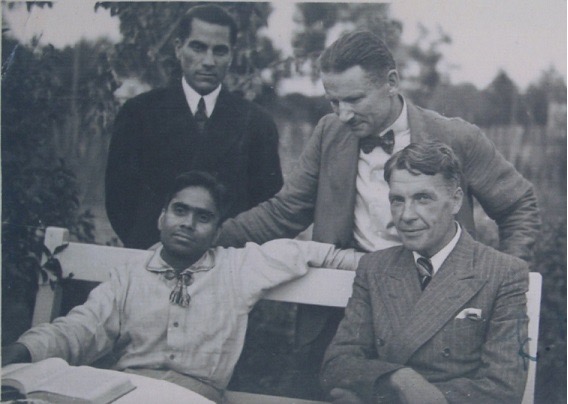
LJB leaders with an Indian yoga teacher – Latvia, spring 1940, LJB president Harijs Dīkmanis is seated on the right, LJB secretary Jānis Veselis is standing on the right (photo from Maigonis Ēriks Ābols’ personal archive)
Jānis Veselis practiced yoga, including Kriya Yoga, regularly every day until the end of his life, although under Soviet conditions these were quite secretive private sessions. The same applies to other former members of the yoga society who remained in Latvia. However, even during the difficult Soviet years, these people did not live in complete isolation. Those who needed it found yoga practitioners and were able to receive the necessary advice, help, and materials. Moreover, after Stalin’s death, during Khrushchev’s thaw, a certain, albeit rather closed, public activity resumed.
One of the former members of the women’s section of the society, Alma Ozoliņa, began organizing private gatherings of former members of the society and some new interested people in the second half of the 1950s. began organizing private gatherings of old members of the society and some new interesting people, an integral part of which was presentations by the most knowledgeable members with readings and lectures on yoga and spiritual growth topics. The old members of the society worked on rewriting the teaching materials from the 1930s, as well as translating newly acquired materials into Latvian. The quality of the translations varied greatly, but at least the content was available to those interested.
There were a few former members of the society who, exceptionally under Soviet conditions, managed to maintain, albeit irregularly and under strict control, correspondence with Indian teachers and occasionally receive some of the new books. After the end of Khrushchev’s thaw, this correspondence mostly ceased, but then materials began to flow in again through contacts in Russian academic circles. Thus, in these matters, the connection with developments in the “Big World” never completely ceased. Thus, Yogananda’s Kriya Yoga lectures remained available to serious seekers in Soviet underground typewritten editions.
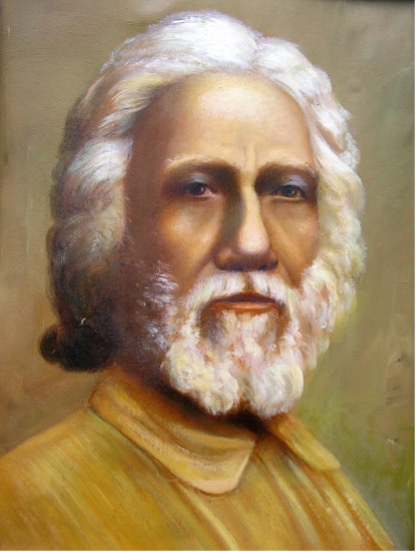
In the context of Soviet spiritual underground activities and Kriya Yoga, writer Alise Eka and her husband Jānis Praiss deserve special mention. Both were involved with Kriya Yoga during the Soviet era. Alise Eka contributed to several important translations, including, it seems, an underground translation of Yogananda’s Autobiography of a Yogi. Jānis Praiss’ portraits of former teachers of the Latvian Yoga Society, Swami Shivananda and Swami Shri Yukteswar, are, according to today’s Kriya Yoga teachers, fantastically accurate depictions of these people’s inner states. The painter had never met these people in person and had only seen a few photographs of them, which had already been through a lot. Nevertheless, he was able to paint them accurately and convey a certain spiritual content through these portraits.
Yoga after the restoration of independence
After Latvia regained its independence in the early 1990s, various yoga clubs began to form. However, this is a completely different era and a completely different approach to the dissemination of yoga teachings. A unified yoga organization such as the Latvian Yoga Society in the 1920s and 1930s was no longer possible.
In India, yoga has always existed in the context of the guru-disciple relationship. As a result, every notable yoga teacher has their “own” yoga lineage. Of course, there is also academic, scientific research into yoga in India, and each individual type of yoga has its own general principles, but thousands of traditional techniques have been developed over the centuries, and there are countless variations. That is why there are many yoga schools, and the most prominent disciples of every great yoga master create new branches of the respective school, or lineages.
In the Western world, however, various yoga clubs and groups are nowadays mostly formed as business structures rather than as social organizations with the goal of promoting a healthy lifestyle or learning and spreading spirituality rooted in Eastern traditions. Latvia is no exception in this regard.
The situation surrounding Kriya Yoga both in India and abroad has also changed significantly during this time. In the 1920s and 1930s, only Yogananda and his assistants and students were involved in spreading Kriya Yoga outside of India. However, Lahiri Mahasai had many disciples, and quite a few of them were authorized to teach others. And although Lahiri Mahasai’s basic set of Kriya Yoga exercises is described quite unambiguously, overall, he practiced this yoga for various purposes and taught his various students a considerable number of different techniques (traditionally considered to be 108 techniques, which is more likely to be a symbolic number meaning “many”). Thus, as Kriya Yoga was passed down through lines of disciples, and as teachers worked in different circumstances and with different students, this tradition branched out and sometimes became quite different in certain lines of succession. Of course, the basic exercises are still easily recognizable, but the differences are no longer just superficial. Kriya Yoga is now widespread outside India, in both the Americas, Europe, Australia, and elsewhere in Asia, and teachers today are no longer exclusively Indian.
Lahiri Mahasai had two sons, Tinkouri Lahiri and Dukouri Lahiri, who received the right to teach others Kriya Yoga. Each of these sons had children who practiced Kriya Yoga and obtained the right to teach Kriya. This is how the so-called Kriya Yoga family lines were formed. However, even within different family lines, the exercises are not performed in exactly the same way, which is a natural result of the process of life and teaching development.
There are Kriya Yoga lines that from time to time claim to be the most authentic Kriya Yoga teachings. For example, there are Kriya teachers who are very critical of Yogananda, or others who are critical of Hariharanda, who at various times worked with large groups of disciples outside India, saying that the changes they introduced into Kriya Yoga are unjustified and inappropriate, etc.
Other Kriya Yoga authorities (such as Shailendra Bijoy Dasgupta, Sidhanath, etc.) point out that the aforementioned teachers taught Kriya Yoga under completely different circumstances and to people with vastly different levels of preparation, so they had to find new adaptations to achieve the same result. They emphasize that the aforementioned teachers not only achieved outstanding results themselves, but also helped many Westerners, who had previously been unfamiliar with any form of yoga, to achieve remarkable results. so critics should first show that they can do the same, and then speak.
One of the basic principles of Kriya Yoga is the observance of the principle of direct teaching – the teachings and methods are passed on directly from the teacher to the student. In this case, the qualifications of the teacher, the student’s own readiness to learn, and the psychological bond between master and disciple are all very important. Therefore, for those who want to seriously study this tradition, the best way is to try to feel internally what appeals to them most.
As for Kriya Yoga in Latvia after the restoration of independence, in the initial period of almost fifteen years, Kriya Yoga almost completely disappeared from wider availability. The members of the old Yoga Society had gradually passed away. Those of the middle generation who knew something about this history and Kriya worked quietly on their own. There were isolated attempts to renew cooperation with Yogananda’s organization in America, etc., but they did not gain a broader and more organized character.
It was only in the summer of 2005 that the “99 White Horses” arrived in Latvia and, in cooperation with Drustu Tautskola “99 White Horses,” a Kriya Yoga seminar was held by Swami Shri Yukteswar and Paramahamsa Yogananda’s outstanding follower, Paramahamsa Hariharānanda’s student and renowned Kriya Yoga teacher Swami Shuddhānanda.
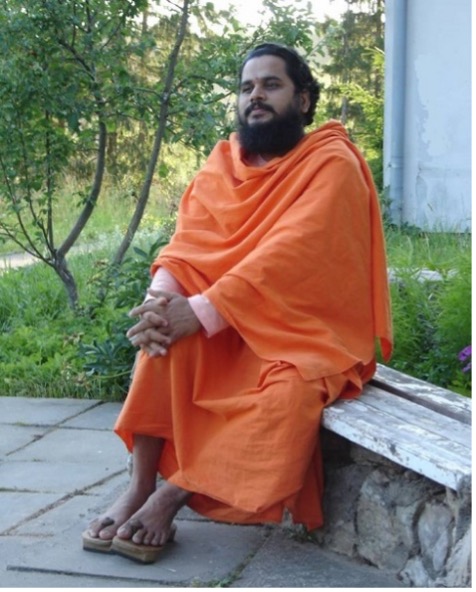
Swami Shuddhananda in Drusti (2005)
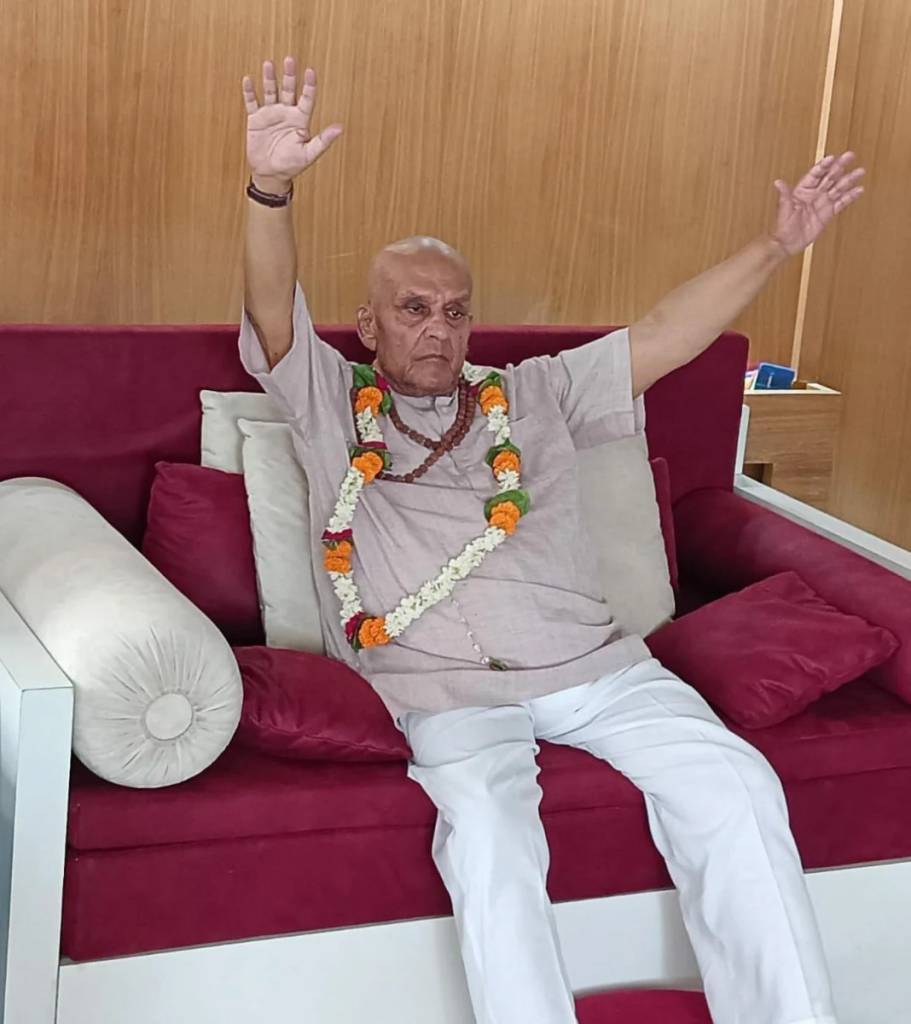
A few years later, Shibendhu Lahiri, the great-grandson of Mahasai representing the Lahiri family line, visited Latvia for the first time. Thus, a community of followers of this particular family line appeared in Latvia. There has also been a seminar in Latvia with Per Wibe, a Swedish yogi and disciple of Swami Shankarānanda, a prominent teacher of the Yukteswar lineage, although the Shankarānanda lineage is mainly active in Lithuania. In addition, Swami Shankarānanda himself regularly visits Lithuania. In Latvia, there is a small circle of followers of the Self-Realization Society founded by Yogananda, as well as Ananda, an organization founded by Yogananda’s disciple Kriyananda, although the activities of people associated with these organizations are not very visible to the public.
Currently, the Kriya Yoga Society has been established in Latvia, and anyone who is actively interested can receive authorized Kriya Yoga initiation and training locally, as well as, of course, visit one of the Kriya Yoga centers and ashrams in Western countries or India. Two to three times a year, teachers from the parent organizations in Austria, America, and India are invited to Latvia.
Our teachers
Over the past twenty years, many teachers have visited Latvia. Here are some of them:
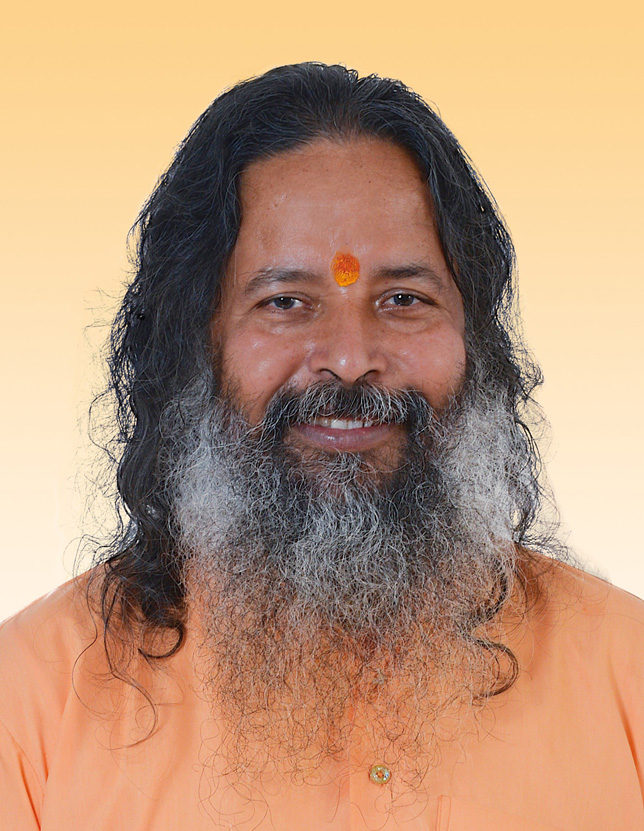
Paramahamsa Prajnanananda
Paramahamsa Prajnanananda (born 1960, Orissa, India; born Triloki Das) is the successor to Paramahamsa Hariharananda in the Kriya Yoga lineage. In 1980, as a student, he received initiation from Gurudev and maintained strict discipline while also working as an economics lecturer. In 1995, he was ordained as a monk (Swami Prajnanananda Giri) and sent to spread Kriya throughout the world; in 1998, he received the title “Paramahamsa.” For more than two decades, he has been teaching around the world, leading the Prajnana Mission, establishing ashrams and schools (Balashrams), and is the author of many spiritual books.
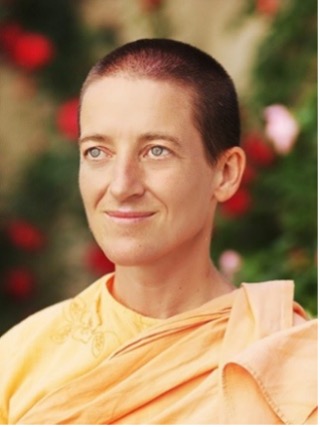
Swami Mangalananda
Born and raised in Germany, she has been practicing Kriya Yoga since 1992. Her first teacher was the renowned European yogi Rajarshi Peterananda from the Netherlands. In 1994, she met her master Paramahamsa Hariharanda and since then has remained close to him in various ashrams, as well as accompanying him on his travels in Europe. Swami Mangalananda studied philosophy and medicine in Germany and Austria. Shortly after completing her studies in 2000, Hariharānanda ordained her as a Swami (monk) of the Giri Order. Thus, Mangalananda became the first woman Swami in this lineage. In recent years, she has led hundreds of meditation programs at the Kriya Ashram in Austria, Tatendorf, and many other places in Europe, as well as regularly visiting Latvia.
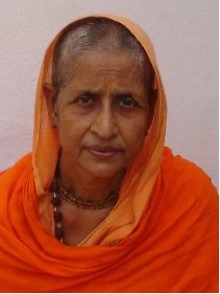
Swami Gurukripananda
Swami Gurukripananda was born in India, in the state of Orissa. Since the early 1980s, she has been a close disciple of Paramahamsa Hariharananda. Swami Gurukripananda has been teaching Kriya Yoga since 2007. In February 2009, she was accepted into the Swami (monk) order. From July 23 to July 26, 2010, Swami Gurukripananda visited Latvia and introduced several interested individuals to Kriya.
Yogacharya Petra Helviga
Yogacharya Petra Helviga has been practicing Kriya Yoga since 1989. Two years later, she met her teacher Gurudev Paramahamsa Hariharananda in America. She then traveled to India with her husband to be close to her teacher. She has two children. Petra Helviga has a background in choreography and worked as a dance teacher and choreographer until 1990. Later, Petra Helviga helped her husband in his yoga studio as a yoga teacher. Since 2007, when she was certified as a Yogacharya during Hariharānanda’s 100th birthday celebrations, she has regularly led Kriya Yoga seminars at the Kriya Yoga Center in the Netherlands and in many other places in Europe, including Latvia.
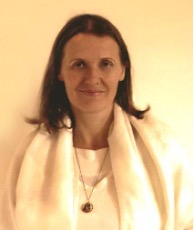
Yogacharya Claudia Kremere
Claudia Kremere has more than 20 years of meditation experience. Since the early 1990s, she has participated in several intensive meditation training programs in India lasting several months, as well as spending considerable time with her master Paramahamsa Hariharananda on lecture and Kriya Yoga training tours in the Americas, India, and Europe. In 2007, during Hariharananda’s 100th birthday celebrations, Paramahamsa Pragjanananda confirmed her as a Yogacharya. Claudia Kremere has studied music and jurisprudence and worked as a civil servant in international organizations. She has been visiting Latvia regularly since 2009.
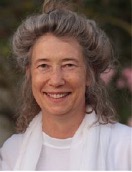
Yogacharya Ushi Schmidtke
Yogacharya Ushi Schmidtke has been practicing kriya yoga since 1994. She received her initiation from Peter van Breukelen, but met her master Paramahamsa Hariharananda in 1995 and since then has been studying kriya yoga more actively. Over the next two years, she traveled regularly to the US to meet Hariharananda. In 2007, she became a kriya yoga yogi. In her daily life, Ushi Schmidtke worked as a medical analyst for more than 40 years. In Latvia – during the 2014 summer program.
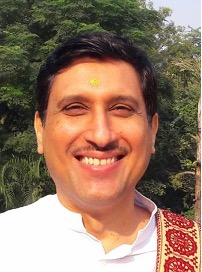
Yogacharya Histas Damania
Yogacharya Histas Damania is a householder, i.e., he has a family and a secular occupation, and lives in Mumbai, India. He was initiated into Kriya Yoga in 2002 and has been authorized to teach Kriya since 2016. He is a practicing architect and, together with Paramahamsa Prajnanandaji, has participated in the design of the Guru Mandir or Gurudeva Paramahamsa Hariharananda samadhi shrine in Balighai, Puri, Orissa, India. He has also participated in other sacred site projects. With the delegation of Paramahamsa Prajnanandaji, he has been performing kriya yoga initiations since 2018. In Latvia – in 2023 and 2024.
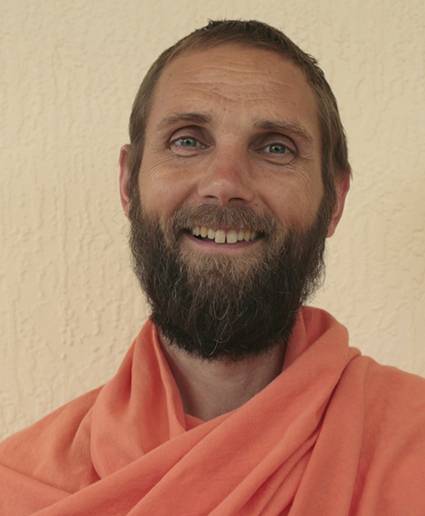
Swami Chidrupananda Giri
Swami Chidrupananda was born in Pasevalka, Germany. In his youth, he worked in railway safety telecommunications. In his search for truth, he read Paramahamsa Hariharananda’s Kriya Yoga and in June 2000 met Paramahamsa Prajnanananda at the Tattendorf ashram, from whom he received initiation. In 2001, he met Gurudev Hariharananda in the USA. After completing a brahmacharya course (2002), he served in Tattendorf, Vienna, and Miami. In 2012, he received sannyasa and the name Chidrupānanda (“consciousness in the form of bliss”). He currently lives at the Mother Center ashram in Homestead, leads programs in the US, and is authorized to initiate Kriya.
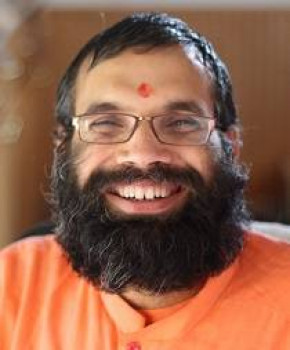
Swami Sahajananda Giri
Swami Sahajananda was born in a small village in Odisha, India. During his studies, he had the good fortune to meet Paramahamsa Hariharananda (Darshan), and this brief encounter left an indelible impression on him. After moving to the United States for work and study, he continued his search for the Master. In 2000, Sahajananda visited the ashram in Homestead, Florida, where he met the great Guru and, having received his blessing, mastered Kriya Yoga meditation. In 2010, with the blessing of Paramahamsa Prajnanananda, Swamiji left his secular work and entered the monastery. In 2016, Paramahamsa ordained him as a monk in the Giri order. The name Sahajananda means “one who rejoices in the joy of the Self (Soul)”.
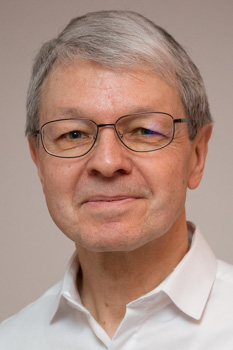
Yogacharya Michael Rieser
After studying mechanical engineering in Karlsruhe, Michael Rieser worked for 35 years as an engineer at BMW in Munich, specializing in engine exhaust purification. He is the father of two sons (born in 1991 and 1993). In 1987, Michael was introduced to Kriya Yoga by Rajarshi Peter van Breikelens. Since 1991, he and his wife Gertie have been organizing Kriya Yoga programs in Munich. Meetings with Gurudev Paramahamsa Hariharananda (1991–2002) and Guruji Paramahamsa Prajnanananda (since 1994) have been a great blessing. In 2023, Paramahamsa Prajnanananda authorized Michael to teach Kriya Yoga.